Third Review Conference
The Third Review Conference (3RC), also known as the Maputo Review Conference on a Mine-Free World took place in Mozambique from 23-27 June 2014. It was in Maputo where 15 years earlier, the Convention met for its First Meeting of the States Parties. In a way, the Convention was returning to one of its birthplaces. From 23-27 June, over 1,000 representatives of States and international and non-governmental organizations met in Maputo to chart the path forward in the global effort to end the suffering and casualties caused by anti-personnel mines.
The Maputo Review Conference marked 15 years since the Convention entered into force:
It is the fact that in positive terms, at least as demining is concerned for some nations, the suffering caused by anti-personnel mines is becoming yesterday’s issue.
New use of anti-personnel mines is rare and is broadly understood to be an unacceptable behaviour.
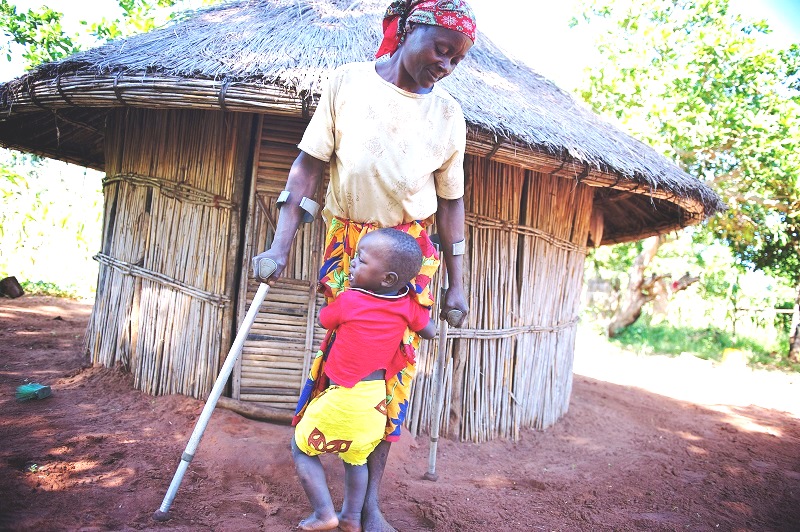
Undoubtedly, the majority of landmine survivors are, in relative terms, better off also because of this Convention.
All but a handful of States Parties have completed the destruction of all stockpiled anti-personnel mines.
In 2014, 27 States Parties that had reported anti-personnel mines in mined areas have completed implementation of their mine clearance obligation.
The Convention is at a different stage than it was when it was adopted in 1997.
Significant progress has been made and lives have been saved. However, challenges remain and the Maputo Review Conference is the chance for the international community to regroup to deal with the realities of what remains at this point in time in the anti-landmines movement.
The Maputo Review Conference on a Mine-Free World was the third time that the international community gathered at a high level to review the status of efforts to end the suffering caused by anti-personnel mines.
The location of the event was significant.
Mozambique symbolised a particular time in the life of the Convention for the following five reasons:
In the early 1990s, Mozambique was one of the countries where the tragedy caused by anti-personnel mines was one of the greatest. Along with gravely affected countries in other regions, Mozambique was one of the birth-places of the anti-landmines movement. This movement achieved much and first-hand results can be seen in Mozambique.
When the Convention was adopted, the clearance of all mined areas was a distant prospect and perhaps, to some, unachievable. By the time of the Maputo Review Conference, however, all that remained in Mozambique was one specific challenge including along its border with Zimbabwe. Mozambique’s progress over anti-personnel mines is the international community’s progress: These achievements have been reached together. The Maputo Review Conference gave hope to those still addressing a landmine problem that with the appropriate national ownership and cooperation and assistance from the international community, end is within sight.
Soon after entry into force of the Convention, Mozambique hosted and presided over the Convention’s First Meeting of the States Parties (1MSP) in May 1999. The 1MSP established the Convention as the international community’s framework for mine action and set it on its path to ensure compliance with the Convention’s obligations. With the Maputo Review Conference, the world will return to where international efforts to implement the Convention began. Just as a foundation was established in 1999 for what needed to be done at that time, the international community had in 2014, a chance to act on what needed to be done at this particular time, fifteen years after it first gathered in Maputo.
In May of 1999, there were but 55 parties to the Convention and Mozambique was only one of 18 States in Africa that had committed to this movement. Regrettably, at the very time the 1MSP was taking place, new use of anti-personnel mines was occurring. By the time of the Third Review Conference there were 161 States that were bound by the Convention, which at the time, was virtually univeralised in Africa. New use of mines was rare and understood by both world leaders and ordinary citizens that mine use is an unacceptable behaviour in the modern world; the norms embodied by the Convention have taken hold.
The international community has made a solemn promise to mine victims. Unlike the destruction of emplaced or stockpiled mines, efforts to fulfil this promise must continue for years. In 1999 the international community first expressed that a comprehensive approach to victim assistance was required with our efforts being part of broader approaches to health care, rehabilitation and human rights. As a developing country, Mozambique knows that ensuring the full participation of all citizens, including mine victims, in the social, cultural, economic and political life of a nation is a tall order. This Convention has made a great difference. However, as an added value, the Maputo Review Conference on a Mine-Free World was a chance to again leverage high level international interest to continue momentum in this area and revive the Convention in a changing and new environment.